
Kingdom Life
Supersonic Studios LTDRole Playing
4.1317.00 Reviews
- Version
- 1.1.7
- Installs
- 500.00K
- Age Rating
- Teen
Screenshots
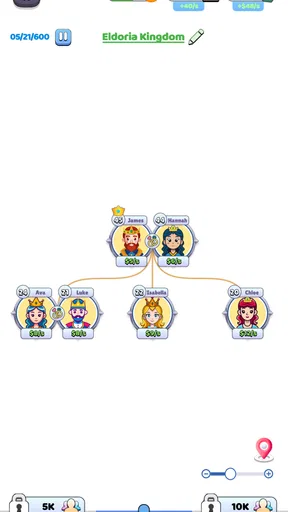
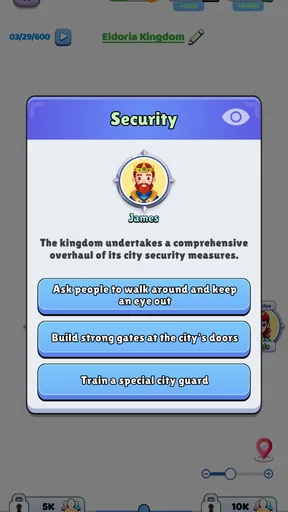


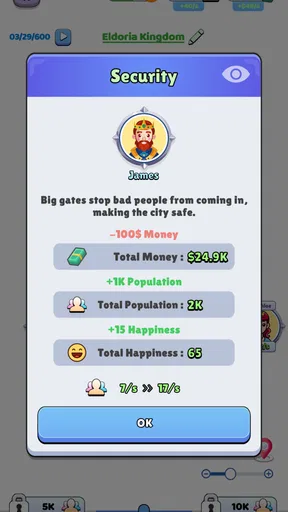

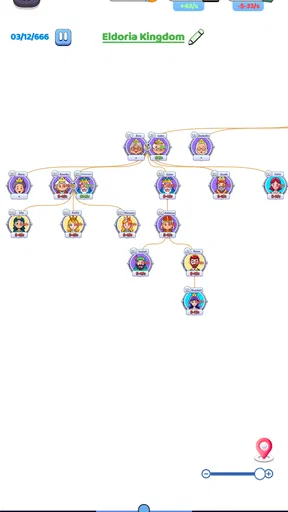
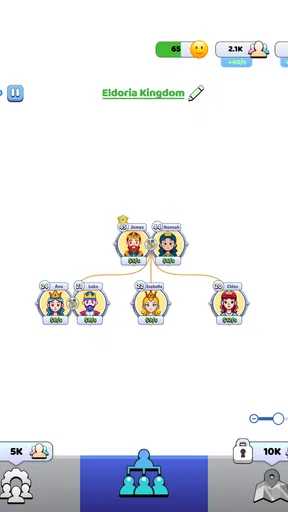
Our Review of Kingdom Life
 Analysis by Appyee
I went into Kingdom Life expecting a light role-playing game about building a realm, and that is exactly the kind of experience it offers: a compact mix of expansion, decisions, and courtly trouble that works best when I want something more involved than a quick puzzle but less demanding than a large, traditional RPG. Its central appeal is the feeling of gradually turning a modest territory into a functioning kingdom while dealing with the people and problems that come with growth.
Developed by Supersonic Studios LTD, the game is free to start and sits in the role-playing category. It has attracted more than 500 thousand installs and holds an average rating of 4.1 from roughly 12 thousand ratings, which suggests that its accessible kingdom-management format has found a fairly broad audience. I can see why: the premise is easy to understand, the sessions are approachable, and the combination of land expansion with intrigue gives the usual building loop a little more personality.
How Kingdom Life feels in its current form
The first thing I noticed is that this is not trying to be a dense historical simulation. It presents kingdom life through straightforward choices and progression rather than overwhelming the player with complicated menus. I spend my time growing the realm, deciding how to approach obstacles, and responding to conflicts that make expansion feel less automatic. That simplicity is useful on a phone, especially when I only have a few minutes available.
At the same time, the game is more enjoyable when I treat it as a steady-management experience instead of a fast race to unlock everything. The satisfaction comes from seeing several small decisions connect: a new area supports the next stage of growth, a choice changes the way a problem feels, and a moment of intrigue interrupts what could otherwise become a repetitive construction routine.
The role-playing label matters here because the kingdom is not just a collection of upgrades. The decisions give the progress a sense of direction. I am not merely tapping through a sequence of improvements; I am trying to keep the realm moving while handling competing pressures. The game’s strongest moments come when expansion and character-driven trouble overlap, because then the kingdom feels like a place with consequences rather than a simple checklist.
That said, players who want a deep strategy game may find the experience too streamlined. I would not choose this as a replacement for a large-scale empire simulator with detailed economics, diplomacy, and military planning. Kingdom Life is better suited to someone who likes the idea of ruling a growing territory but prefers a guided, mobile-friendly structure.
Growth works best when I plan around interruptions
A useful habit is to avoid treating every available improvement as equally urgent. When I focus only on visible expansion, I can lose sight of the story and intrigue elements that give the game its identity. I found it more satisfying to pause before committing to the next step and consider whether I was prepared for the complications that might follow.
This creates a small but meaningful trade-off. Expanding quickly feels rewarding, but a slower rhythm gives me more time to understand how the game presents its problems. For new players, my advice is to resist tapping through every prompt as quickly as possible. Read the situation, notice what kind of response it seems to invite, and use the early portion of the game to learn its logic rather than chasing immediate growth.
That approach is especially helpful during a short evening session. If I have ten minutes before bed, I can make one or two decisions and leave the kingdom in a clear state instead of beginning a long, complicated campaign. The game’s structure makes it easy to return later, although players who prefer uninterrupted, story-heavy sessions may find the shorter interactions less immersive than a conventional RPG.
Intrigue gives the building loop a needed change of pace
The intrigue element is important because it prevents the kingdom from feeling like a purely decorative project. Whenever the game shifts attention from land and growth toward relationships or political complications, I have to think differently. The best way forward is not always the option that appears most beneficial immediately, and that uncertainty gives otherwise simple decisions more weight.
I also appreciate that these moments encourage me to pay attention to context. Rather than selecting an answer automatically, I try to think about what the kingdom needs at that point: stability, progress, or a response that protects the longer-term direction of my rule. This is one of the game’s less obvious strengths. Its systems may be approachable, but the presentation encourages a little more consideration than a standard idle progression title.
Still, I would keep expectations measured. The intrigue is there to support the accessible role-playing format, not to turn the game into a fully reactive political drama. If you are looking for complex branching narratives where every decision produces a dramatically different campaign, this may feel limited. If you want short dilemmas that break up kingdom development, it is much easier to appreciate what the game is doing.
What the current version means for players
The current version is 1.1.7, while the game was released on Jul 30, 2024. That places it in a relatively early stage compared with long-established mobile role-playing games. I see that as both a positive and a reason for caution. The core idea is already clear and playable, but the experience should be judged as a developing mobile title rather than as a finished replacement for the biggest games in the genre.
For someone installing now, the main benefit is that the game’s identity is easy to understand. You are growing a kingdom, expanding territory, and dealing with intrigue. There is no need to learn a huge collection of unrelated systems before the premise becomes enjoyable. The current build works best for players who want a focused loop and are comfortable with the possibility that future updates may shape how the experience develops.
Existing users will probably notice the value of familiarity more than dramatic reinvention. Once I understand the rhythm of expansion and decisions, I can make progress with less hesitation and spend more attention on the choices themselves. That makes returning to the game more comfortable, but it also means that players who have already exhausted the central loop may want meaningful new situations rather than small surface adjustments.
I would separate the confirmed current state from future expectations. The version number shows that the game has already moved beyond its initial release, but it does not guarantee a particular roadmap or a specific type of upcoming content. I would not install it solely because I expect a certain feature to arrive later. I would install it because the present combination of kingdom growth and intrigue already matches what I want from a mobile RPG.
Who will get the most from it
Kingdom Life is a good fit for players who enjoy light management, readable choices, and gradual progression. It is particularly suitable if you like the fantasy of ruling a realm but do not want to study a complicated economy before making your first meaningful decision. The Teen content rating also makes its intended tone clearer: this is aimed at older children and adults who are comfortable with conflict and political tension presented in a game setting.
I can also recommend it to people who usually find traditional role-playing games too time-consuming. The kingdom theme gives each short session a purpose, while the decision-making keeps the experience from becoming only a passive waiting exercise. It is a useful choice for commuting, taking a break, or filling a small gap in the day when I want progress that feels connected to a larger goal.
On the other hand, I would skip it if your priority is deep character customization, complex combat, or a large open world. Nothing about the game’s central appeal suggests that it is designed to compete with those experiences. Players who want precise strategic control over every resource may also find the guided structure restrictive. In that case, a dedicated strategy game would probably offer more satisfying long-term planning, while a conventional story RPG would be better for character-focused adventures.
Free entry does not mean every player will spend nothing
The game is free, which makes it easy to try without committing money at the start. It includes in-app purchases ranging from $0.99 to $99.99 per item, so I would approach the store carefully and decide in advance whether optional spending fits my habits. The broad price range means the game can remain accessible to someone who never pays, but it also means players who are sensitive to purchase prompts should keep an eye on how they interact with progression.
My practical advice is to play long enough to decide whether the basic kingdom loop is enjoyable before considering any purchase. Spending will not fix a mismatch between your tastes and the game’s structure. If you already like the decisions, expansion, and intrigue, an optional purchase may feel more understandable; if the core rhythm feels repetitive, paying more is unlikely to change that judgment.
This is also where the game differs from a premium role-playing title. A paid game often gives me a clearer sense of what I am buying before I begin, while a free-to-start game asks me to evaluate both the gameplay and the way progression is presented. Kingdom Life wins on accessibility, but players who prefer a single upfront purchase may be more comfortable with a premium alternative.
Practical ways to approach the kingdom
My first recommendation is to treat decisions as part of the progression system, not as interruptions between upgrades. The game is more distinctive when I engage with its dilemmas. If I rush through them simply to reach the next expansion, I reduce the experience to a more ordinary growth loop and lose much of what separates it from basic city-building games.
Second, I would use short sessions deliberately. Before closing the game, I try to leave myself with a clear next objective rather than opening several unrelated tasks. This makes returning easier and avoids the feeling that I have forgotten why a particular decision mattered. It is a small workflow, but it helps the game feel organized on a phone where interruptions are common.
Third, I would judge progress by the variety of situations I am handling, not only by how quickly the territory grows. Expansion is the most visible reward, but intrigue is what adds texture. When I focus on both, the game feels more like a role-playing experience. When I focus only on expansion, it can start to resemble a repetitive upgrade ladder.
There is also a useful mindset for players who dislike making imperfect choices: do not assume that every decision needs to produce an immediately ideal outcome. The appeal of a kingdom story comes partly from managing consequences. I find it more enjoyable to accept a less-than-perfect result and continue rather than restarting mentally every time a choice does not appear optimal.
For families, the Teen rating is worth considering before installation. The game’s setting involves kingdom conflict and intrigue, so it is not aimed at very young children. For adults sharing a device with a younger player, I would review the in-app purchase setup as well, since free access and optional item purchases create different considerations from a fully paid game.
Where the experience still feels limited
The biggest limitation is the tension between an appealing premise and a relatively focused structure. “Grow a kingdom” sounds broad, but the game’s enjoyment depends on how much you like its particular rhythm of decisions and expansion. If that loop clicks, the simplicity is refreshing. If it does not, there may not be enough alternative activities to keep you interested.
I also think the game asks the player to supply some of the imagination. The idea of handling a realm and its intrigues is attractive, but the experience is not the same as a deep simulation where every political or economic choice has a visible, detailed chain of effects. Players who want extensive systems may see the streamlined design as a lack of depth rather than an advantage.
The free-to-start model can add another layer of friction. Even when I am enjoying the game, I have to remain aware of the difference between playing naturally and feeling pushed toward optional purchases. That does not make the game unsuitable, but it does make it less ideal for anyone who wants a completely uninterrupted premium experience.
Finally, the relatively recent release means I would be careful about expecting the breadth of content found in mature role-playing franchises. The current version is a reasonable reason to try the game, not proof that it will eventually become a much larger product. I prefer to evaluate what is playable now and let future changes remain a bonus rather than part of the purchase decision.
What I would watch as the game develops
If I continue following Kingdom Life, I would pay attention to how future versions handle variety. The central idea is strong enough for more kingdom situations, but new content would matter most if it created genuinely different decisions rather than simply extending the same progression path. More variety in the problems facing the realm would help experienced players keep finding reasons to return.
I would also watch the balance between expansion and intrigue. The game is at its most distinctive when both sides support each other. If growth becomes much more important than decision-making, the role-playing identity could feel weaker. If intrigue becomes too dominant without clear rewards for kingdom development, the expansion side could lose its purpose. The best direction would keep the two activities connected.
For new users, the practical question is simpler: does the current loop sound enjoyable enough to justify a free download? If yes, the low entry barrier makes trying it sensible. I would give it a fair session, notice whether the decisions hold my attention, and decide afterward whether the pace suits me. There is no need to approach it as a long-term commitment on the first day.
For existing users, the question is whether the latest version continues to make the kingdom feel active rather than merely larger. Returning players usually need fresh reasons to care about another round of development. New situations, better decision variety, and a satisfying relationship between political problems and territorial growth would be more valuable than simple numerical progression.
Overall, I see Kingdom Life as an approachable role-playing game with a clear mobile purpose. It gives me a pleasant way to combine kingdom expansion with light intrigue, and it works particularly well in short sessions where I want meaningful choices without a heavy ruleset. Its free price makes experimentation easy, while the Teen rating and optional purchases are details worth considering before handing it to a younger player or spending money.
I would recommend it to a friend who enjoys casual kingdom management and wants decisions to matter a little more than they do in a basic idle builder. I would not recommend it to someone seeking a deep strategy simulation or a premium, story-rich RPG. The strongest reason to try it is the balance between accessible growth and political complications; the main reason to move on is that the focused loop may not offer enough variety for players who need extensive systems. Try it for the decisions, stay for the feeling of shaping a realm.
Verdict
Strengths of Kingdom Life
- Simple controls make the game easy for newcomers to pick up.
- The kingdom-building theme gives progression a clear sense of purpose.
- Short play sessions suit casual gaming on mobile devices.
- Unlockable content provides goals beyond the opening stages.
- Colorful visuals make the game approachable for younger players.
Limitations of Kingdom Life
- Progress may feel repetitive once the main building loop becomes familiar.
- Some upgrades can require considerable time to complete.
- Small interface elements may be difficult to use on compact screens.
- The game may become less engaging for players seeking deep strategy.
- Performance can vary on older phones or tablets.
Other Releases by Supersonic Studios LTD
View All


Similar Picks in This Category
View All
Hair Dye
CrazyLabs LTD4.4

Monster High™ Beauty Salon
CrazyLabs LTD4.5

Bus Simulator - Bus Games 3D
Jima Apps4.4

Flight Pilot: 3D Simulator
Wildlife Studios4.1


Super Stylist Fashion Makeover
CrazyLabs LTD4.4
Frequently Asked Questions
What is Kingdom Life, and what can I do in the app?
Kingdom Life is a faith-focused app designed to help users engage with Christian content, reflect on biblical teachings, and strengthen their daily spiritual routine. Depending on the version available for your device, it may include devotionals, Bible-based resources, inspirational messages, prayer material, or community features. Its main purpose is to provide convenient encouragement and guidance in one place.
Is Kingdom Life free to download and use?
Kingdom Life may be available as a free download, but some features or content could require in-app purchases, a subscription, or registration. Before installing, check the app store listing for the current pricing details, supported payment options, and any premium limitations. It is also worth reviewing the subscription terms carefully so you understand renewal dates and cancellation requirements.
Does Kingdom Life require an internet connection?
An internet connection is generally recommended for downloading the app, receiving new content, signing in, and accessing online features. Some resources may remain available offline after they have been loaded, although this depends on the app version and the specific content. If reliable offline access is important to you, check the latest store description and test the feature after installation.
Is Kingdom Life suitable for children and families?
Kingdom Life may be useful for families, but suitability depends on the content, language, community functions, and age rating shown in the Google Play Store or Apple App Store. Parents should review the available material and privacy settings before allowing children to use it. If the app includes accounts, messaging, or external links, supervision and parental controls are recommended.
What permissions and personal information does Kingdom Life request?
During installation or first use, Kingdom Life may request permissions related to notifications, account creation, storage, or internet access. These permissions can support reminders, saved content, and synchronization, but you should only grant access that seems necessary. Read the app’s privacy policy and store disclosures to learn how information is collected, used, stored, and shared before creating an account.
Play our best games!


